



March 20, 2026 at 7:00pm
Tonight’s Music
-
Eugène Bozza (1905–1991)
Sonatine for Brass Quintet
I. Allegro moderato
II. Andante ma non troppo
III. Allegro vivo
IV. Largo – Allegro
Composed: 1951
Eugène Bozza is especially well known to brass players for his etudes and competition works, and his Sonatine has become one of the central pieces in the brass quintet repertoire. Written in France in 1951 and modestly dedicated to the musicians of the Republican Guard, the work shows Bozza’s deep understanding of brass instruments and his ability to combine virtuosity with color and lyricism.
The first movement is lively and rhythmically charged, making striking use of mixed meter and passing musical gestures from one player to another. The result is music that feels constantly in motion, with each instrument contributing to a tightly woven texture. By contrast, the second movement opens with an expansive trumpet melody floating above rich, chordal support from the rest of the ensemble. Although marked Andante, the music creates the impression of gaining speed as Bozza gradually writes in smaller and more active note values while the underlying pulse remains steady.
The third movement is a brilliant scherzo-like display of agility and ensemble precision, full of quick exchanges and relentless momentum. It has long been admired, and feared, by brass players for its technical demands. The final movement begins with a broad and imposing Largo introduction that recalls material from earlier in the work before launching into an energetic Allegro. From there, the music gradually finds its footing and drives toward a dazzling conclusion, bringing the full brilliance of the brass quintet on display.
-
Wolfgang Amadeus Mozart (1756–1791)
Horn Quintet in E-flat major, K. 407
I. Allegro
II. Andante
III. Rondo (Allegro)Composed: 1782
arr. for brass quintet by David Marlatt
Mozart wrote his Horn Quintet in E-flat major for the Austrian horn player Joseph Leutgeb, a close acquaintance and one of the great horn virtuosos of his day. Mozart met Leutgeb in Salzburg, where he played in the Archbishop’s orchestra, and the two remained connected after both later moved to Vienna. Leutgeb, like many musicians of the time, needed more than performing work to make a living and eventually opened a small cheese shop with financial help from Mozart’s father, Leopold.
Leutgeb was clearly a remarkable player, though Mozart also loved teasing him. The manuscripts of Mozart’s horn works are famously filled with jokes and sarcastic remarks aimed at Leutgeb, showing off Mozart’s mischievous sense of humor. Still, the friendship seems to have endured warmly. In fact, when Mozart later faced financial difficulties of his own, Leutgeb was among those who lent him money.
Composed in 1782, the Horn Quintet was the first work Mozart wrote for Leutgeb. Its instrumentation is unusual: rather than the standard string quartet, Mozart scored it for horn, violin, two violas, and cello. That choice creates a particularly warm, mellow sound world, one that highlights the horn’s rich middle register instead of setting it against a brighter, more brilliant string texture.
Leutgeb would have played this piece on a natural horn, a valveless instrument that required extraordinary control and flexibility. Long before the invention of modern valves, horn players produced pitches through a combination of lip tension and subtle hand placement in the bell. The demands of this work are a reminder of just how skilled Leutgeb must have been.
The piece itself is full of warmth, elegance, and charm, and it often feels almost like a miniature horn concerto. The horn frequently takes center stage, introducing important themes and singing above the ensemble while the accompanying instruments support and respond. The opening Allegro begins with a brief flourish before the horn enters with the main theme. The Andante offers some of the work’s most lyrical writing, with a graceful, conversational partnership between soloist and ensemble. The final Allegro is a lively rondo, built around a cheerful recurring theme and ending with a spirited burst of energy.
For this performance, we are presenting David Marlatt’s arrangement for brass quintet. Marlatt preserves Mozart’s solo horn part unchanged, while reimagining the accompanying material for brass ensemble. The result retains the character and elegance of the original while offering a fresh and sonorous new setting for modern performers.
-
During intermission, treat yourself to another drink from our bartender, Al—and don’t forget to show him some love with a tip.
-
Felix Mendelssohn (1809–1847)
String Quartet No. 1 in E-flat major, Op. 12
I. Adagio non troppo – Allegro non tardante
II. Canzonetta: Allegretto
III. Andante espressivo
IV. Molto allegro e vivaceComposed: 1829
arr. for brass quintet by Verne Reynolds
Mendelssohn wrote some truly astonishing chamber music while still a teenager, including piano quartets, string quartets, the Octet, and his first viola quintet. It is hard not to be amazed by how fully formed his compositional voice already was at such a young age. He also had the benefit of growing up in an exceptionally cultured and intellectually rich household in Berlin, where his talent was nurtured from the beginning.
His String Quartet in E-flat major, Op. 12, was his first published quartet, and it already shows an incredible sense of drama and emotional range. While Mendelssohn is often thought of as the most classically balanced composer of his generation, this piece reaches far beyond elegance and formal clarity. There is something almost theatrical about it, especially in the first violin writing, which at several moments breaks away from the texture in recitative-like passages that feel personal and spontaneous.
The opening gesture recalls Beethoven’s “Harp” Quartet, and that connection feels meaningful. Beethoven had died only a short time earlier, and there is a sense here of Mendelssohn both honoring that influence and moving toward something distinctly his own. The first movement is lyrical and restless by turns, and Mendelssohn saves some of its darker material for surprisingly late in the movement, which gives the music an unsettled, searching quality.
The second movement has a light, hushed, almost enchanted character, often bringing to mind the fairy world of A Midsummer Night’s Dream. The third movement is more intimate and songful, led by the first violin in music that feels almost operatic in its expressiveness. The finale is especially striking, full of tension and turbulence before eventually finding its way back to earlier material in a way that feels both dramatic and deeply nostalgic.
For this performance, we are playing a brass quintet arrangement by Verne Reynolds. In this setting, the trumpet takes on the leading role of the first violin, carrying much of the soaring melodic material while the rest of the ensemble reimagines Mendelssohn’s rich string writing in a new color. It offers a fresh perspective on the piece while still preserving its intensity, lyricism, and dramatic sweep.
-
Snacks
Popcorn
Cocktails
K. 407 Classic (old fashioned) - whiskey, muddled orange, bitters
Bozza Breeze (cosmo) - vodka, cranberry, triple sec, lime
Brass & Lime (marg) - tequila, triple sec, lime, simple
Wine
Red and White
Sodas
Coca-Cola, Diet Coke, Sprite
Tip your bartender!
Meet the Musicians

Jered Montgomery, Trumpet

Michael Leavens, Trumpet

Fiona Chisholm, Horn

Matt Flanagan, Trombone
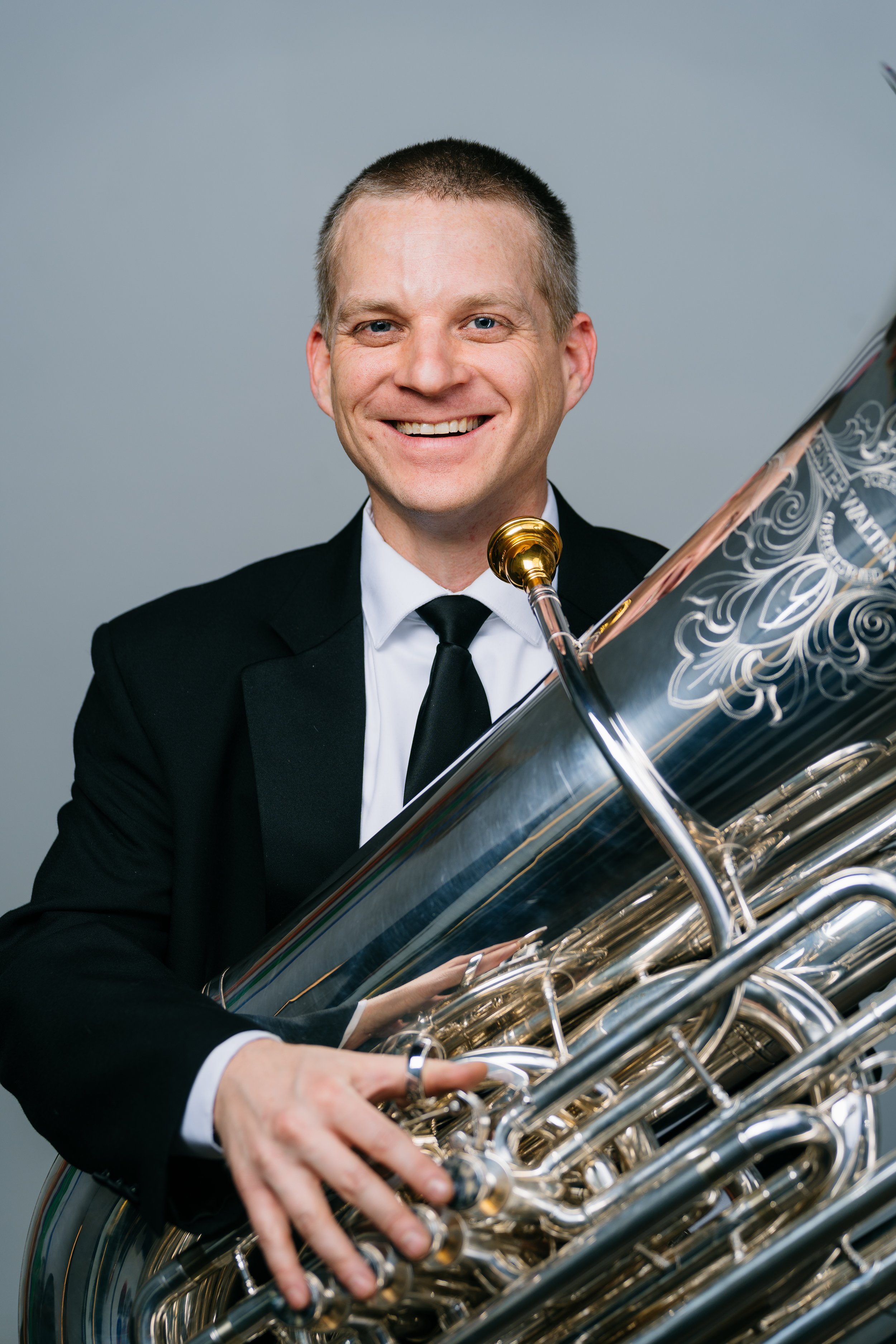
Keith Polito, Tuba
Thank you for being here tonight.
We are so grateful for your support of Lakeshore Brass and for the encouragement you have shown us throughout this season. Your presence at these performances, your enthusiasm, and your willingness to be part of what we are building have helped make this concert series something truly meaningful.
Community is at the heart of what we do, and this season has reminded us again and again that live music is most powerful when it brings people together. Whether you joined us for one concert or have been with us all season long, thank you for being part of it.
While we are sad that Brass Classics marks our final performance of the season, we are also incredibly excited for what is ahead. We look forward to returning for the 2026–2027 season and to sharing even more music, connection, and community with you in the year to come.
Thank you for being here tonight and for supporting Lakeshore Brass.
Lakeshore Brass - Jered, Michael, Fiona, Matt, and Keith